
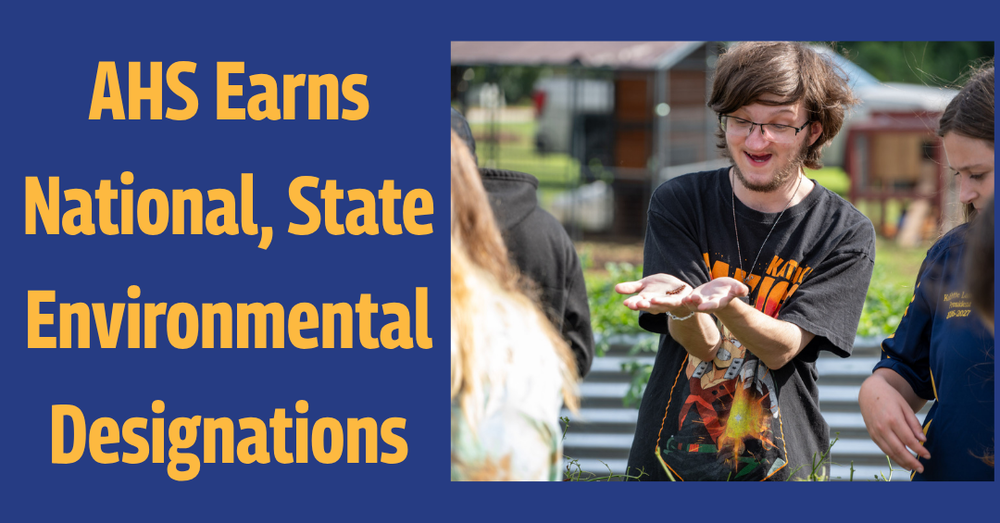
Alexander High School students are planting native species, removing kudzu and protecting a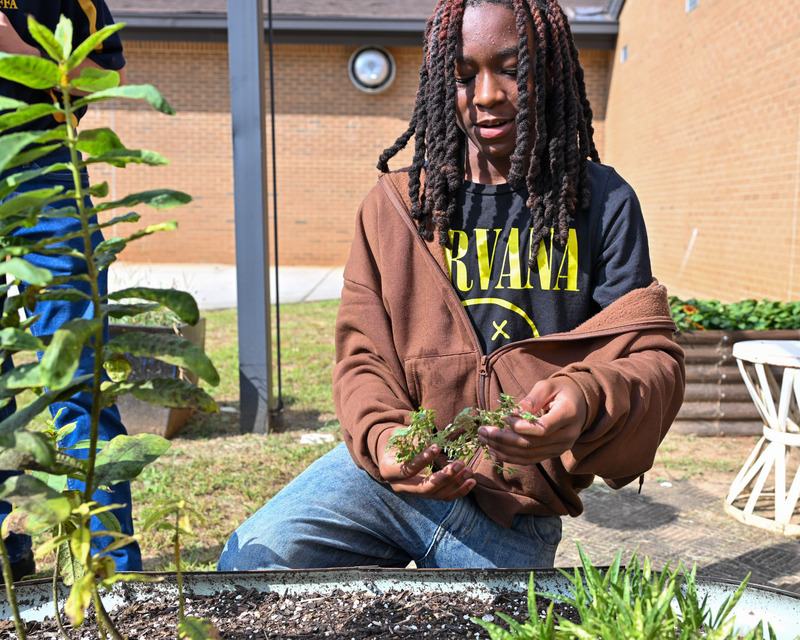 stream, all while watching Gulf fritillaries develop into butterflies on campus. The work is part of two national and statewide environmental designations the school has earned.
AHS became an Ocean Guardian School through the National Oceanic and Atmospheric Administration last year and more recently became a Georgia Aquarium HydroLynk Certified School.
Agriculture teacher Ryan Bragg oversees the NOAA program, which is focused on protecting Gray’s Reef National Marine Sanctuary in the Atlantic Ocean off the Georgia coast and the waterways leading to it.
Tina Moran, who teaches forensics, engineering and AP Environmental Science, partners with Bragg on the HydroLynk designation, which emphasizes local watersheds and water quality and the impact that can be made at the state level. The program draws students from Bragg’s agriculture classes, Moran’s AP Environmental Science class and the Beta and Science clubs she sponsors.
“It’s a real life skill to be a global citizen,” Bragg said of what students are getting from the programs.
Moran added, “This is taking it past our classroom into the state and looking at ways that what we can do can affect our whole state.”
 Bragg’s students in the NOAA program are continuing the garden project they started last year, which focuses in part on beautifying the campus by planting native flowers like blanket flower and black-eyed Susans in visible areas and installing rain barrels for water conservation.
Purple passionflower, planted last year, has become a host plant for Gulf fritillary caterpillars, which students have watched develop from eggs to chrysalises. Native milkweed nearby supports monarch butterflies, and Bragg said Georgia plays an important role in their migration.
“If we don’t have the vital habitat here, then it doesn’t matter what everybody did elsewhere, because the ones elsewhere aren’t going to make it to Mexico,” he said.
Bragg added that his NOAA students have gathered acorns, hickory nuts and other native seeds from around campus, growing them into seedlings in the school’s greenhouse for eventual planting.
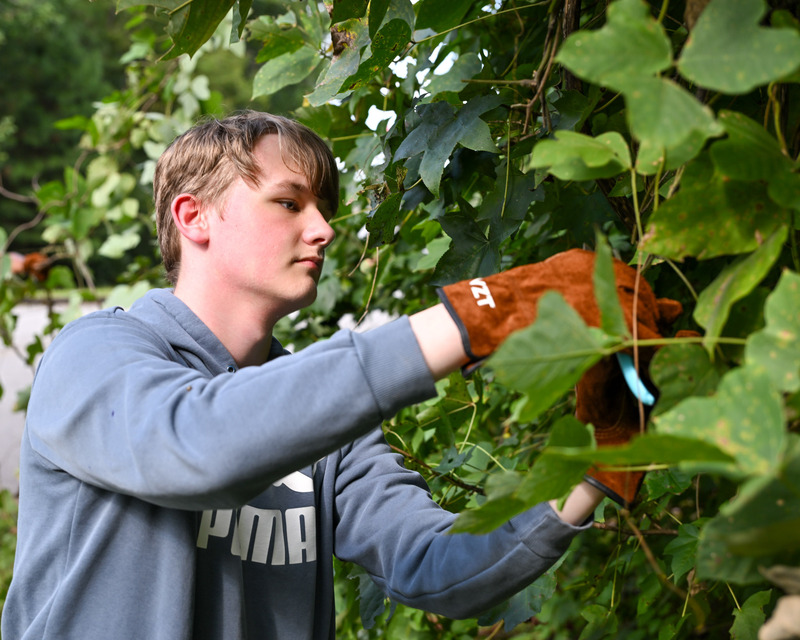
Students in the HydroLynk program are removing kudzu on campus through repeated cuttings to exhaust growth.
Once the kudzu is under control, students will expand native plantings, including purple passionflower, while pawpaw and persimmon trees already started in the greenhouse will be planted.
The kudzu removal is part of broader HydroLynk efforts to stabilize the stream bank along the edge of campus and reduce pollution reaching it.
Students in both programs are learning the same lesson, Moran said.
“Every little thing that we do affects something else,” she said.